Coconut oil isn’t just a trendy health food – it’s a true multitasker that deserves a permanent spot in your kitchen, bathroom and even your cleaning cabinet. From nourishing skin and hair to boosting recipes and tackling everyday household chores, this natural oil packs a powerful punch. Whether you’re new to coconut oil or just looking for new uses for it,, this list of 35 unique way to use coconut oil will show you just how versatile it is. But first..a bit about coconut oil.
DISCLOSURE: THIS POST MAY CONTAIN AFFILIATE LINKS, MEANING I GET A COMMISSION IF YOU DECIDE TO MAKE A PURCHASE THROUGH MY LINKS, AT NO COST TO YOU. THANK YOU FOR SUPPORTING A SMALL BUSINESS!
What Is It?
Very simply, coconut oil is an edible plant-based fat extracted from the kernel (or flesh) of mature coconut fruit. It can be a solid white fat at room temperature that melts into a clear liquid oil at higher temperatures.
The History
Coconut oil has long been used in a variety of ways in the tropical regions of Asia where coconuts are abundant. It was introduced into the West in the 19th century and became a popular cooking oil until World War II when it became scarce in supply. After the war, soybean oil became the popular cooking oil and coconut oil took a backseat due to the high saturated fat content. In more recent years, coconut oil has increased in popularity again due to its health benefits and multiple uses.
How To Choose The Best Coconut Oil
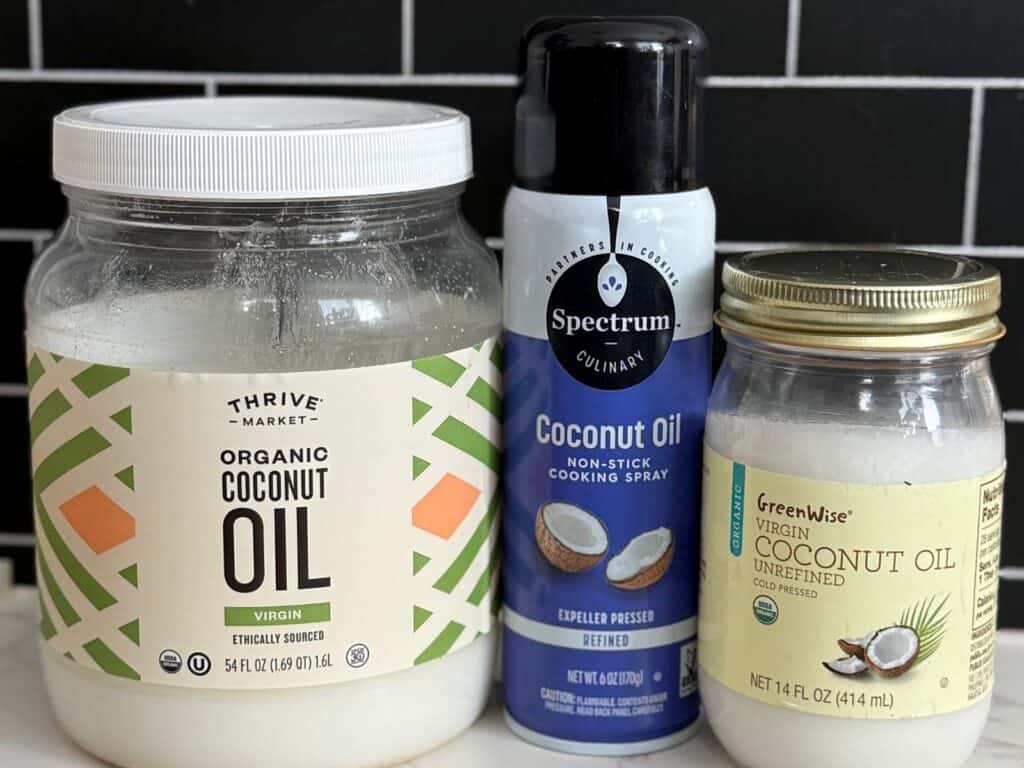
You may have noticed that there are a few different types of coconut oils on the store shelves. There is refined, unrefined, cold pressed, expeller pressed, virgin, extra virgin, etc. There are quite a few descriptors and it’s important to know what they all mean so you can make your own decision based on what you’re using it for, I personally choose organic unrefined cold pressed coconut oil. But if you don’t like the taste of coconut oil, you might prefer to choose the refined version.
Refined vs Unrefined
Refined Coconut Oil:
- May be extracted from coconut meat (called copra) that has been dried from heat
- Undergoes processing like bleaching and deodorizing to remove flavor and odor
- Has a higher smoke point, making it suitable for high-heat cooking
- No coconut flavor
Unrefined Coconut Oil (also known as Virgin/Extra Virgin):
- Extracted from fresh coconut meat, often using a cold-press method (no heat)
- Not refined, bleached or deoderized
- Retains the natural coconut flavor and aroma
- May contain more beneficial nutrient and antioxidants
Virgin vs Extra Virgin
Virgin/extra virgin simply means that the coconut oil is cold pressed and unrefined. Extra virgin is generally a marketing term and used interchangeably with ‘virgin’. Some say that it can be a considered a slightly higher quality product which can make it harder to find and slightly more expensive.
Cold Pressed vs Expeller Pressed
Cold Pressed: This means that the coconut oil was extracted without heat, preserving more of the nutrients.
Expeller Pressed: This oil was extracted using mechanical pressure, often at higher temperatures
Health Benefits of Coconut Oil
There are many ways to use coconut oil and one of those ways is by ingesting it. Coconut is considered a superfood due to it’s blend of healthy fats, vitamins, minerals and antioxidants.
Energy Boost
Coconut oil contains MCT’s or medium-chain triglycerides which are a type of healthy fat that go directly to your liver and give your body a quick energy boost.
Weight Management
When incorporating small amounts of coconut oil into your diet, it can help burn fat.
Digestion & Blood Sugar
The fiber in coconut oil aids and slows digestion and can also prevent spikes in blood sugar.
Immune Support
Coconut oil contact lauric acid which is a fatty acid that makes up about 50% of the MCT’s in coconut oil. Lauric acid is what gives coconut oil it’s antimicrobial and antifungal properties that support overall immune function.
Fights Inflammation
Coconut is high in antioxidants that help protect against cell damage caused by free radicals.
20 Best Ways To Use Coconut Oil
In the Kitchen
1. Baking: Use as a sub for butter or vegetable oil for a healthier option in cakes, breads and any other baked goods.
2. Smoothies: Add a tablespoon to your morning or afternoon smoothie for some added benefit and quick pick-me-up.
3. Coffee Creamer: Add a dollop to your morning coffee as a creamer for that added energy boost.
4. Popcorn: Coconut oil is a perfect butter substitute to obtain that movie theater buttery taste.
5. Coconut Rice: Add a couple of tablespoons to your rice to make coconut rice.
6. Roasted Veggie Flavoring: Coat your veggies to add a bit of a tropical flavor to them. Pairs well with sweet potatoes and carrots.
7. Cast Iron Seasoning: Use a refined coconut oil (for its higher smoke point) to season your cast iron skillet.
8. Energy Boost: If you’re just looking for a quick energy boost, you can just grab a spoonful and eat it!
9. Cooking Oil: Swap out your inflammatory cooking oils ((ie vegetable, sunflower, safflower) for a healthier option.
In the Bathroom
On Skin:
10. Makeup Remover: Use a small amount on a soft cloth to remove makeup.
11. Moisturizer (for any areas of skin, ie face, knees, elbows, etc): Apply a small amount to clean, damp skin and gently massage in to lock in moisture. If you have acne prone or oily skin, use sparingly.
12. Foot Odor: Because of its anti-fungal and anti-bacterial properties, applying a thin layer to the bottom of feet at night will allow it to absorb and combat bacteria.
13. Diaper Rash: Use on baby’s bum in place of traditional toxic diaper rash creams.
14. Eczema Relief: Anti-microbial properties help combat inflammation, itching and dryness caused by eczema.
15. Sunburn Soother: Coconut oil is a great soother for sunburns, helping to reduce inflammation and pain.
16. Lip Balm/DIY Lip Scrub: Use it on its own as a lip moisturizer or add it as an ingredient in a DIY lip scrub recipe.
17. Stretch Mark Reduction: The antioxidants in coconut oil can help protect skin from tissue damage and its ability to deeply moisturize can help make skin more elastic and resilient to stretching.
18. Massage Oil: Coconut oil makes a great massage oil for relaxation because of its ability to absorb and moisturize.
19. Shaving Cream: Replacing your traditional shaving cream is easy and great for the skin. It can help reduce razor burn and irritation.
20. Bug Bite Relief: Its anti-inflammatory properties can reduce swelling, redness and itching caused by bug bites. It can also be paired with essential oils to increase relief.
21. Natural Deodorant: Due to the natural anti-bacterial properties in coconut oil, it can be used alone as a deodorant to absorb odors, but is especially effective when mixed with ingredients like baking soda or arrowroot powder.
Other Uses:
22. Animal Skin Issues: It can also help your animals with skin issues such as dryness, itchiness and minor infections.
23. Oil Pulling & Teeth Whitening: Take a tablespoon and swish it around in your mouth to reduce bacteria and plaque and potentially decrease inflammation and gingivitis. This is also how you will whiten your teeth naturally!
24. Toothpaste: Make a basic and very clean toothpaste with coconut oil and baking soda.
25. Hair Treatment: There are many ways you can use coconut oil for your hair, but I like to warm it up and give myself a scalp massage. I have oily hair so I don’t do it often, but you can also apply it to damp hair, cover with a shower cap and leave it for a couple hours or overnight for a deep conditioning mask.
26, Constipation Relief: You can ingest a tablespoon or 2 with the intent of lubricating the intestines naturally making it easier to have a bowel movement.
27. Hemorrhoid Treatments: Use it as a natural moisturizer and lubricant to soothe irritation, reduce friction and alleviate pain and itching.
28. Yeast Infections: Coconut oil kills candida and can be an effective non-toxic at-home treatment for yeast infections.
In the Cleaning Cabinet
29. Squeaky door hinges: Use it as a non-toxic WD-40 to fix squeaky door hinges.
30. Stain Remover: It can help remove stains from upholstery, carpets and crayon marks from walls.
31. Residue Remover: It is great at removing sticky residue like labels, gum other adhesive residues
32. Wood Polish: Mix with lemon juice for a natural wood polish
33. Metal Polish: Polish and shine stainless steel and bronze appliances and fixtures
34. Leather Cleaner: Use it to clean and condition leather items like shoes and furniture.
35. Carrier Oil: Use fractionated coconut oil as a carrier for essential oils
Final Thoughts
Coconut oil proves to be an incredibly versatile product, offering benefits and uses that go far beyond cooking, from skincare to household cleaning. Its natural properties make it a safe and sustainable alternative to many commercial products. Exploring these unique uses will not only inspire a more eco-friendly lifestyle but will also help you take another small step to a more natural lifestyle.
Wow! These are such great uses for coconut oil! Thanks for sharing!
Thank you for this! I always browse at the store but never know what to get since it’s all so similar looking, Now I know what type of coconut oil I need!
Great post! There are so many uses for coconut oil. Pinning this so I can come back to it as a reference. 🙂
Wow, these are a lot of clever and great uses for coconut oil! Thanks for sharing
I love coconut oil, but would never have guessed to use it for foot odor or as an alternative to WD-40! This is a great list!